Professional Bed Bug Treatment & Removal
Professional Bed Bug Treatment & Removal
How we can help with a bed bug problem
Bed bugs are one of the most distressing household pests to deal with. Unlike ants or fleas, they are highly elusive, resistant to many off-the-shelf treatments, and capable of spreading quickly throughout a property. Once established, bed bugs rarely disappear on their own and usually require targeted professional treatment to fully eliminate them.
At Bite Back Pest Control, we provide specialist bed bug treatments designed to tackle infestations at every stage of their lifecycle — from hidden adults to newly hatched eggs.
Why Bed Bugs Are Different From Other Household Pests
Bed bugs behave very differently to most common household pests. They do not live in nests, they are active mainly at night, and they are experts at hiding in cracks and fabric seams close to where people sleep.
Key differences include:
Bed bugs feed exclusively on blood, not food waste
They hide in mattresses, bed frames, headboards and soft furnishings
Many populations are resistant to standard insect sprays
Eggs can survive initial treatments and hatch weeks later
Because of this, DIY sprays and general pest treatments often fail, allowing infestations to return. Effective bed bug control requires a structured treatment plan rather than a single visit.
How Bed Bug Infestations Commonly Start in UK Homes
Bed bugs are not linked to poor hygiene and can affect even the cleanest properties. In the UK, infestations most often begin when bed bugs are accidentally brought into a home.
Common sources include:
Luggage and clothing after travel or hotel stays
Second-hand furniture, especially beds and sofas
Shared accommodation, flats, and HMOs where bugs move between rooms
Overnight guests unknowingly carrying bed bugs with them
Once inside a property, bed bugs tend to stay close to sleeping areas, spreading gradually to nearby rooms if left untreated.
Signs of Bed Bugs in Your Home
Bed bugs are experts at hiding, which means infestations often go unnoticed until they become well established. Recognising the early signs can help prevent the problem from spreading to other rooms or neighbouring properties.
Bites or skin reactions
Bed bug bites commonly appear as small, red, itchy marks on exposed skin such as arms, shoulders, neck, or legs. They often occur in lines or clusters and may be noticed after sleeping. However, not everyone reacts to bites, so the absence of bite marks does not rule out an infestation.
Blood spots on bedding
Small rust-coloured or dark red stains on sheets, pillowcases, or mattresses can be a sign of bed bugs being crushed during the night. These marks are often one of the first visible indicators people notice.
Black spots or smears
Bed bugs leave behind tiny black dots or smears, which are their droppings. These are commonly found along mattress seams, on bed frames, behind headboards, or in the corners of furniture near sleeping areas.
Live bed bugs or shed skins
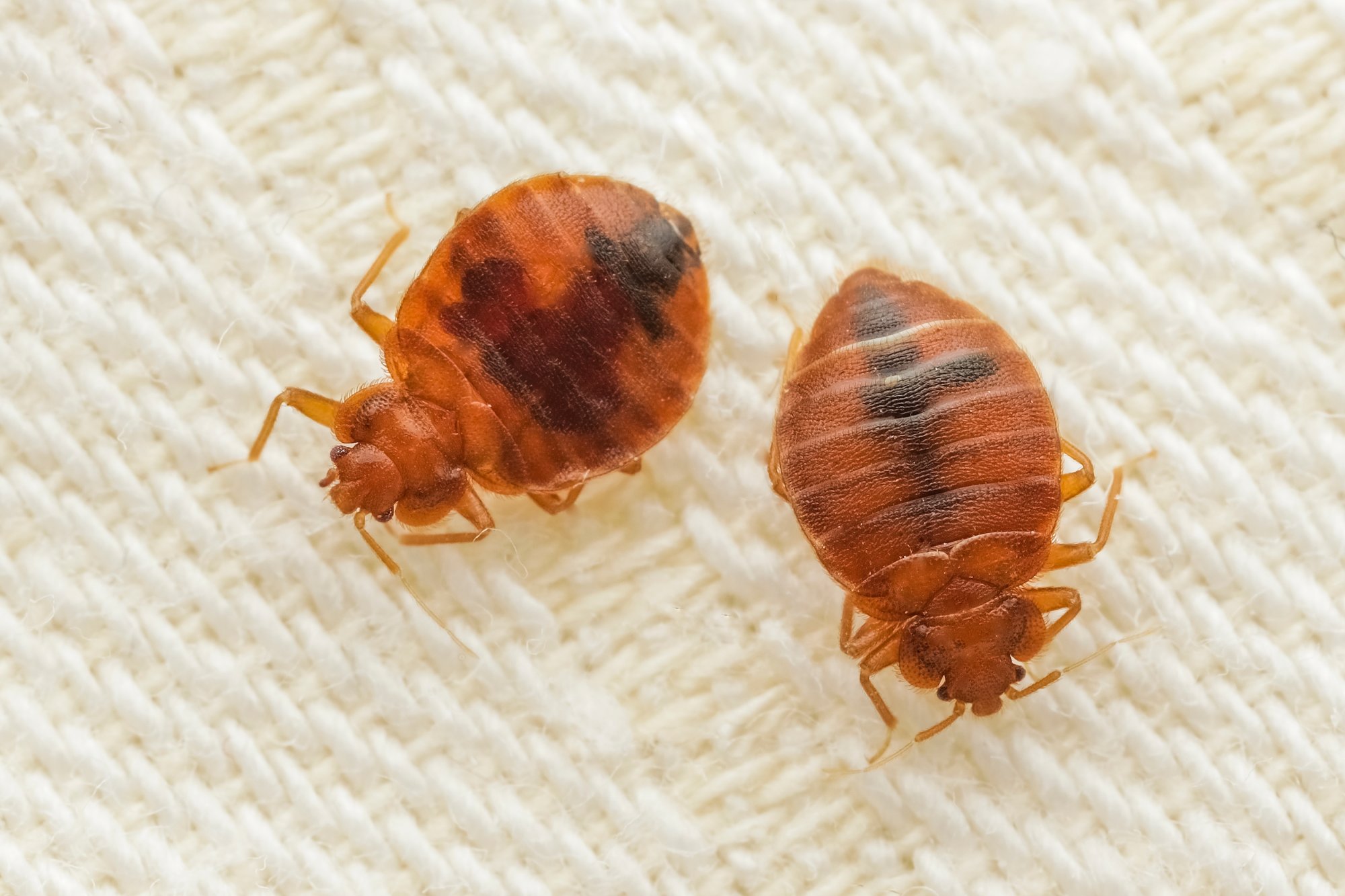
Adult bed bugs are flat, oval-shaped, and brown in colour, roughly the size of an apple seed. You may also find pale, empty skins that bed bugs shed as they grow. These are often hidden in mattress seams, cracks in wooden frames, or joints in furniture.
A musty or sweet odour
In heavier infestations, bed bugs can produce a distinctive musty or sweet smell. This odour is caused by pheromones and is usually noticeable in bedrooms or rooms where bugs are concentrated.
Signs spreading beyond the bedroom
Although bed bugs prefer to stay close to where people sleep, infestations can spread to sofas, chairs, curtains, and nearby rooms over time. Finding signs in multiple areas often indicates an established infestation that requires professional treatment.
Bed Bug Treatment FAQs
How long does bed bug treatment take?
The length of treatment depends on the size and severity of the infestation. In most cases, professional bed bug treatment requires more than one visit to ensure all active bugs and newly hatched eggs are fully eliminated. A follow-up visit is often essential, as bed bug eggs can survive initial treatments and hatch weeks later.
Do I need to leave the property during bed bug treatment?
This depends on the treatment method being used. In many cases, you may need to vacate the treated areas for a short period while the treatment is carried out and allowed to dry. Our technician will explain exactly what is required in advance so you can plan accordingly.
Can bed bugs live in sofas, carpets, and other furniture?
Yes. While bed bugs are most commonly found in beds and bedrooms, they can also hide in sofas, chairs, carpets, curtains, and electrical sockets. This is why a thorough inspection is important, as treating only the bed itself may not resolve the infestation.
Will bed bugs come back after treatment?
When treated correctly, bed bugs should not return. However, reinfestation can occur if new bed bugs are introduced after treatment, for example through travel or second-hand furniture. Following preparation and aftercare advice helps reduce the risk of bed bugs returning.
Are bed bug treatments safe for children and pets?
Professional bed bug treatments are designed to be used safely when applied correctly. We provide clear guidance on when it is safe to re-enter treated areas and any precautions that should be taken for children and pets during and after treatment.
How can I prepare my home for bed bug treatment?
Preparation is a crucial part of successful bed bug control. This may include laundering bedding and clothing, reducing clutter, and allowing access to beds and surrounding furniture. We will provide clear, step-by-step preparation instructions before treatment begins.
How quickly should I act if I suspect bed bugs?
Bed bugs spread quickly and are much easier to eliminate when caught early. If you suspect an infestation, it’s best to arrange a professional inspection as soon as possible to prevent the problem from becoming more widespread and harder to treat.
“We offer professional bed bug treatment across Leeds, York, Hull, East Yorkshire, and surrounding areas…”
Bite Back Pest Control
At Bite Back Pest Control, we believe everyone deserves to feel safe and comfortable—whether at home or in the workplace. That’s why our dedicated team provides reliable, personalised pest control solutions tailored to meet the unique needs of both residential and commercial clients. Trust us to handle the pests, so you can focus on what matters most—running your business or enjoying your home.
Quick Links
Find Us
2 Cooper Grove
Pocklington,
East Riding of Yorkshire,
YO42 2SH

© Bite Back Pest Control
Data Privacy Policy
Your data privacy policy goes here.....
Rodent Control picture: Scary Rat Stock photos by Vecteezy